






Details
PET RODS
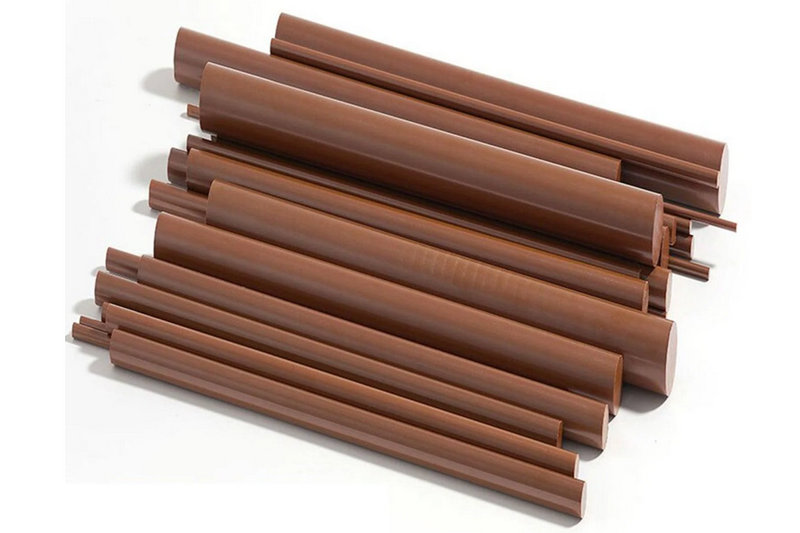
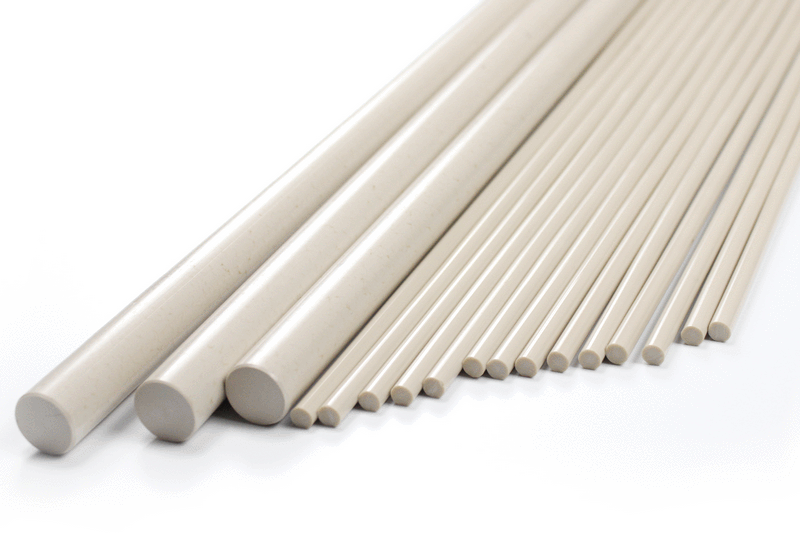
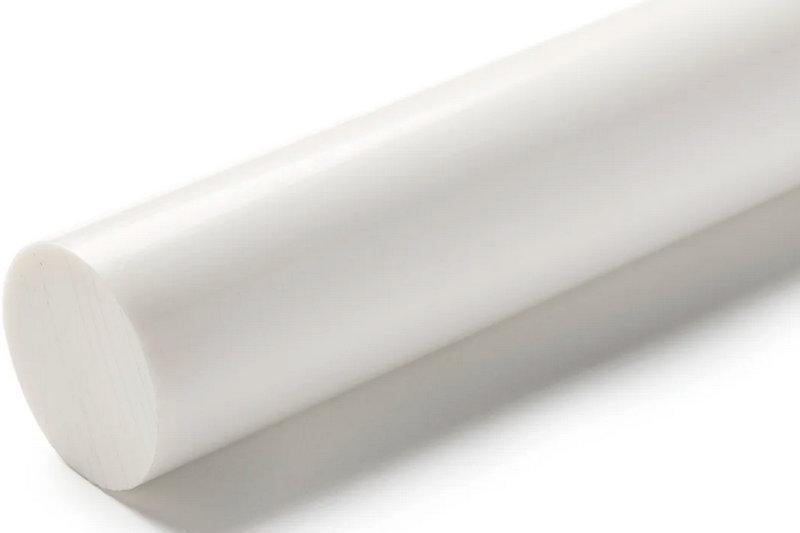
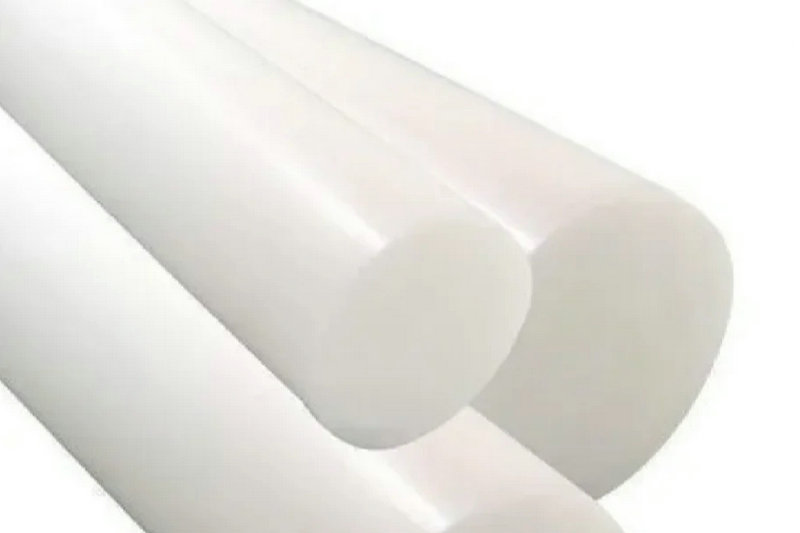
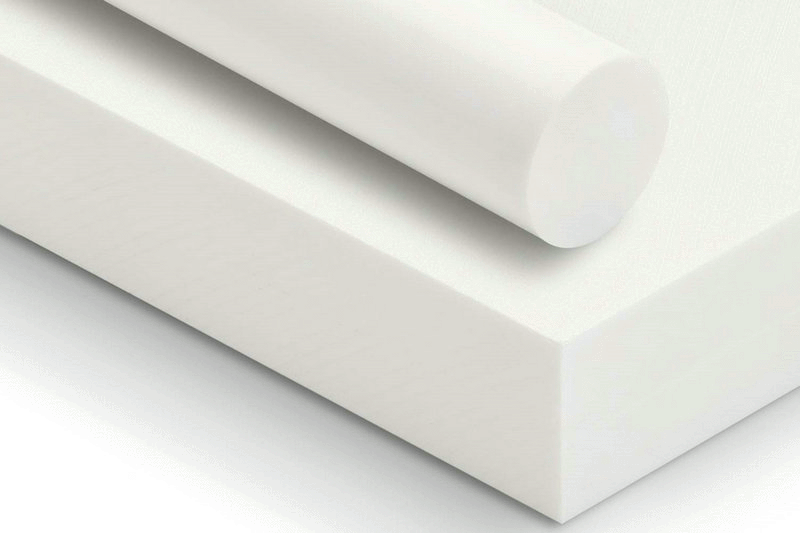
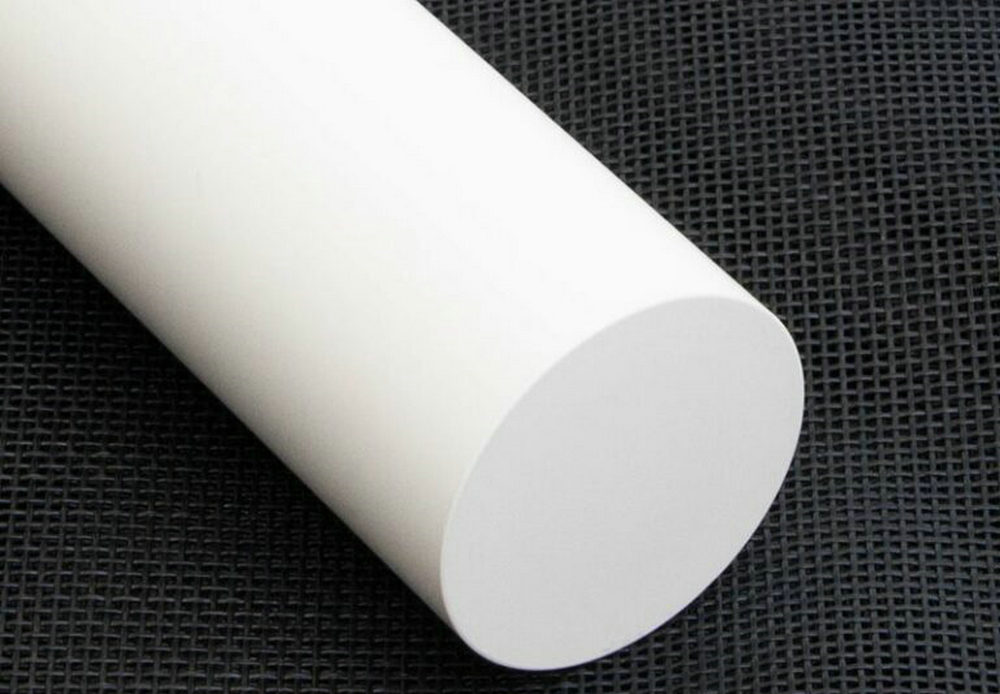
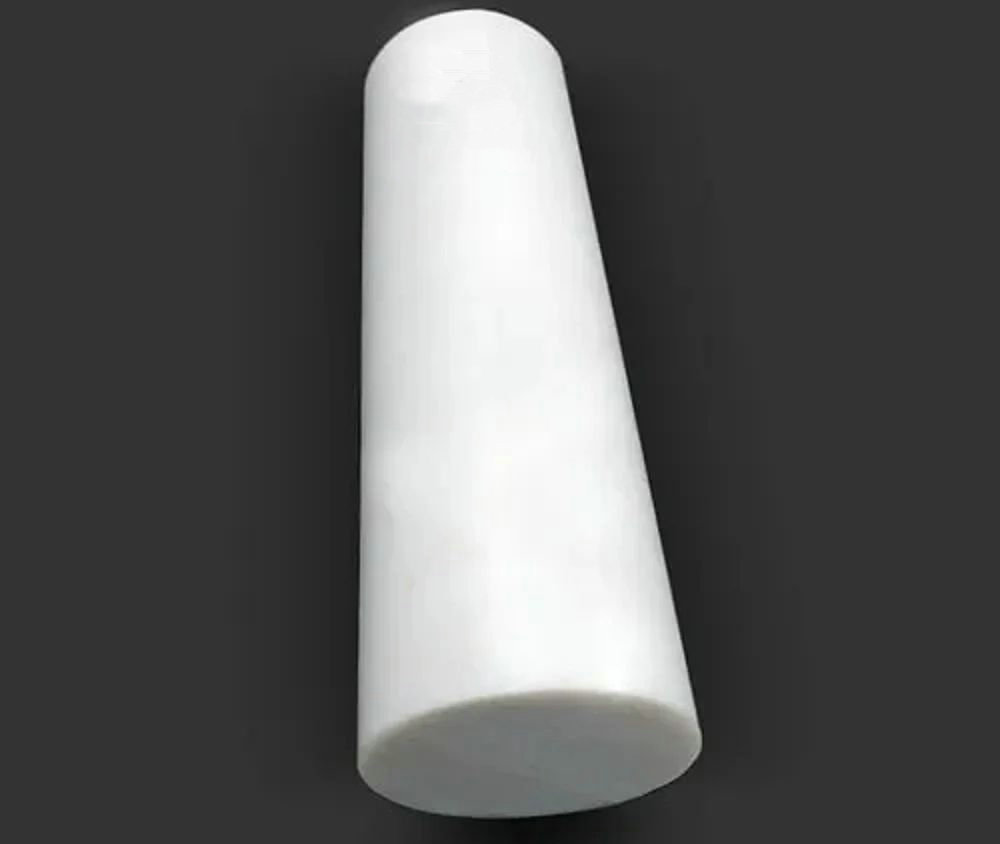
PET Rods are solid cylindrical bars made from Polyethylene Terephthalate (PET), a thermoplastic polymer belonging to the polyester family. Produced via extrusion or compression molding, PET rods combine high mechanical strength, chemical resistance, and dimensional stability. These rods are widely used in mechanical, electrical, and industrial applications due to their high strength, excellent wear resistance, and low moisture absorption. PET rods offer remarkable dimensional stability, making them ideal for precision machining and applications requiring tight tolerances.
Key Features:
PET rods possess a range of features that make them highly desirable in industrial applications:
-High Mechanical Strength – PET rods offer high tensile and compressive strength, making them suitable for load-bearing applications.
-Excellent Dimensional Stability – PET has a low coefficient of thermal expansion (CTE), meaning it retains its shape even under temperature fluctuations.
-Low Moisture Absorption – Unlike materials such as nylon, PET absorbs very little moisture,0.1–0.3% (24 hours),, ensuring long-term stability in humid conditions.
-Good Wear and Friction Resistance – PET rods have a smooth surface with low friction, making them ideal for applications requiring reduced wear.
-Superior Chemical Resistance – PET is resistant to oils, greases, solvents, and mild acids/bases.
-Good Electrical Insulation – PET rods have excellent dielectric properties, making them ideal for electrical components.
-Easy Machinability – They can be easily turned, milled, drilled, and sawed into complex shapes without significant material deformation.
-Temperature Resistance – PET rods can withstand moderate to high temperatures without losing their mechanical properties.
-Recyclability – PET is an environmentally friendly material and can be recycled.
Types:
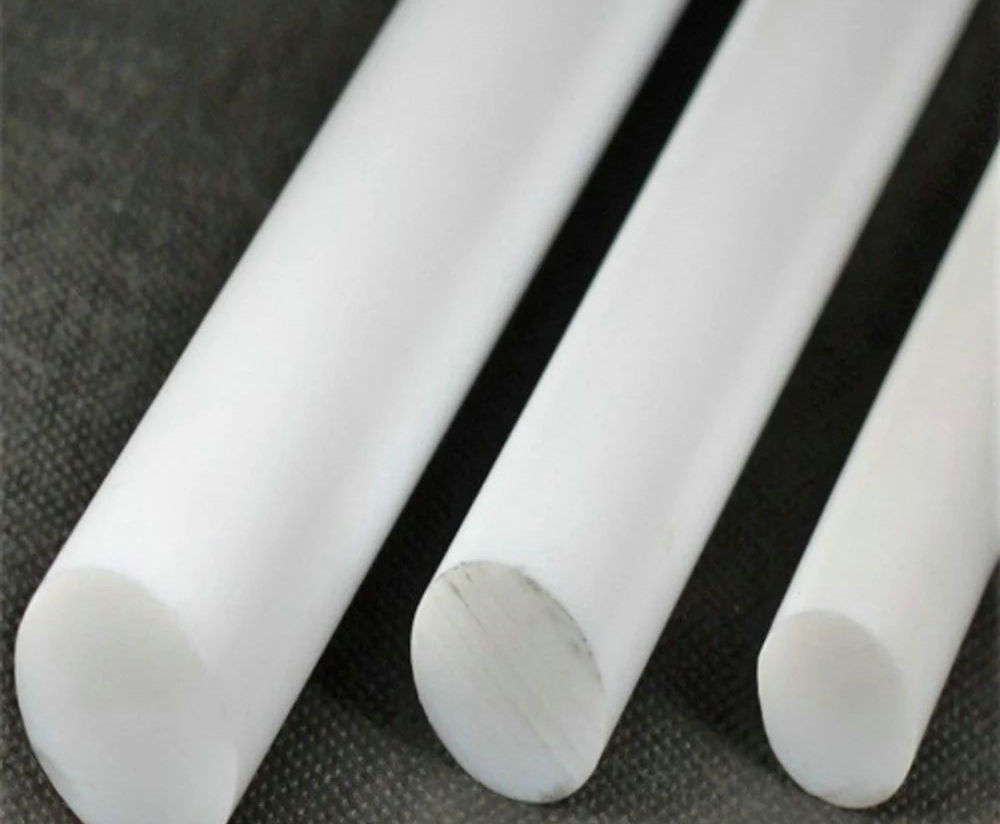
PET rods are available in different grades and modifications to suit various industrial applications:
A. Amorphous PET Rods
-Have a non-crystalline structure, providing high clarity and good impact resistance.
-Typically used in applications requiring optical clarity and flexibility.
-Slightly lower mechanical strength compared to crystalline PET.
B. Semi-Crystalline PET Rods
-These rods have a higher degree of crystallinity, giving them enhanced mechanical strength, wear resistance, and thermal stability.
-Preferred for high-load and high-temperature applications.
-More rigid and durable than amorphous PET.
C. Glass-Filled PET Rods
-Reinforced with glass fibers to improve stiffness, strength, and heat resistance.
-Used in structural applications where extra rigidity is required.
D. Lubricated PET Rods
-Contain internal lubricants to reduce friction and wear, making them ideal for sliding and bearing applications.
Technical Parameters:
Below are typical values for PET rods. Actual values may vary depending on the grade.
Property | Typical Value |
Density | ~1.38 g/cm³ |
Tensile Strength | 70 – 110 MPa |
Elongation at Break | 10 – 50% |
Hardness (Rockwell) | M88 – M100 |
Impact Strength (Charpy) | 2 – 6 kJ/m² |
Melting Temperature | ~250°C (482°F) |
Glass Transition Temperature | 75 – 85°C |
Coefficient of Friction | Low (Self-lubricating available) |
Moisture Absorption (24h) | <0.5% |
Electrical Resistivity | High (Good Insulator) |
Note: Values vary based on formulation, processing methods, and additives.
Product Benefits:
High Mechanical Performance
-High tensile strength and stiffness.
-Better creep resistance than nylon and acetal.
Excellent Dimensional Stability
-Low thermal expansion ensures precise machining with minimal distortion.
Chemical and Wear Resistance
-PET resists various chemicals, oils, and greases, ensuring durability in industrial settings.
Low Moisture Absorption
-Unlike nylon, PET remains dimensionally stable even in humid environments.
Good Sliding Properties
-Low friction makes it ideal for bearing and gear applications.
Easy Machinability
-Can be lathed, milled, and drilled with precision without material chipping.
Recyclable and Eco-Friendly
PET rods are 100% recyclable, reducing environmental impact.
Applications:
PET rods are used in various industries due to their excellent mechanical and thermal properties:
A. Industrial Applications
-Mechanical components – Bushings, bearings, gears, and rollers.
-Wear-resistant parts – Guide rails, conveyor components, and cams.
-Structural supports – Rigid support frames and load-bearing parts.
B. Electrical & Electronics
-Insulation components – PET’s dielectric properties make it suitable for insulators, covers, and switchgear parts.
-Semiconductor applications – Used in high-precision electrical devices.
C. Automotive Industry
-Under-the-hood components – PET’s heat resistance makes it suitable for parts exposed to engine heat.
-Bearing and sliding elements – Found in seat adjustment systems, windows, and door mechanisms.
D. Medical & Food Industry
-Food processing parts – PET is FDA-approved for contact with food.
-Medical devices – Used in surgical and diagnostic equipment due to its chemical resistance.
E. Textile and Packaging
-Spindles and rollers – Used in textile machinery.
-Molds and cutting boards – Found in packaging and industrial processing.
Storage & Handling:
Proper storage is necessary to maintain PET rod quality:
-Store in a cool, dry place away from direct sunlight.
-Avoid moisture exposure, though PET absorbs little water.
-Keep in original packaging to prevent contamination or scratches.
-Do not store near heat sources, as prolonged exposure can alter properties.
-Ensure proper support when storing long rods to prevent bending.
FAQ
Q1: Can PET rods be machined?
A: Yes, PET rods can be easily lathed, milled, drilled, and sawed, offering precise machining capabilities.
Q2: How do PET rods compare to nylon rods?
A: PET rods absorb much less moisture than nylon, have better dimensional stability, and offer higher wear resistance in sliding applications.
Q3: Are PET rods resistant to chemicals like gasoline?
A: No. Avoid prolonged exposure to hydrocarbons, strong acids, or ketones.
Q4: Is PET rod recyclable?
A: Yes, PET is 100% recyclable, making it an eco-friendly choice for many applications.
Q5: Are PET rods suitable for high-load applications?
A: Glass-filled PET rods handle higher loads (up to 120 MPa). Standard PET is ideal for moderate loads.
Q6: How do PET rods compare to PEEK rods?
A: PEEK has higher thermal resistance (up to 250°C) but is 5–10x more expensive.
Q7: Can PET rods be glued or welded?
A: Yes. Use epoxy adhesives or ultrasonic welding for strong bonds.
Q8: What tolerances can be achieved during machining?
A: ±0.1 mm for standard machining; tighter tolerances (±0.05 mm) with CNC.
Q9: Do PET rods expand with temperature changes?
A: Thermal expansion coefficient is 60–65 × 10⁻⁶/°C; factor this in precision applications.
- PRE: 100100 PET Sheets
- NEXT: No more